Shandong Fudeng Automobile Co, Ltd. matthew@fudengtrailer.com

Views: 0 Author: Site Editor Publish Time: 2026-04-11 Origin: Site
For beginners entering the freight industry, one key question is unavoidable: “Should I choose a low bed trailer or a standard flatbed trailer?”
Although both are widely used in cargo transport, their applications, performance, and capabilities differ significantly. Choosing the right one can save costs and improve efficiency, while the wrong choice may lead to compliance risks and limited profitability.
This guide breaks down the core differences and provides practical purchasing advice to help beginners make the right decision.

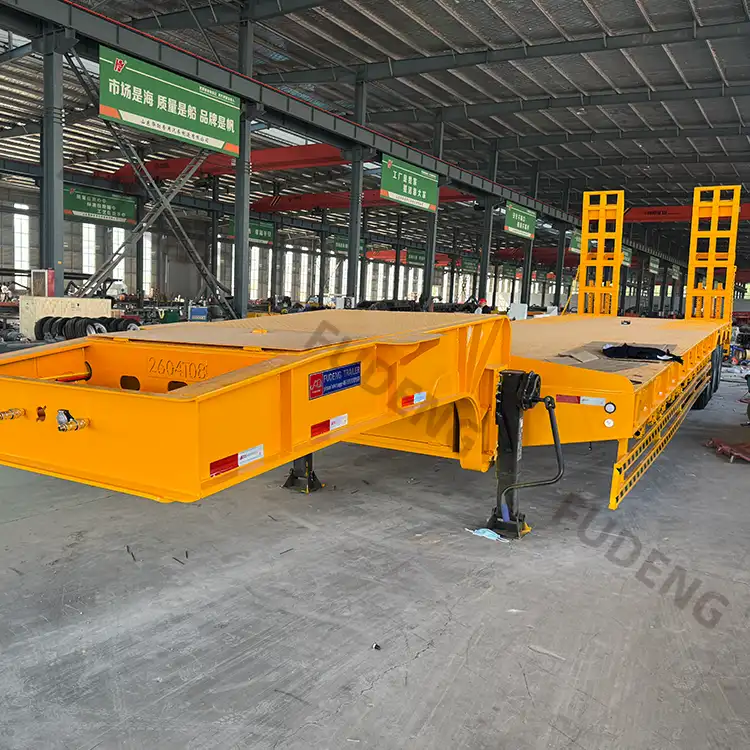
Comparison Aspect | Standard Flatbed Trailer | Low Bed Trailer |
Structure | Straight frame, no drop deck | Gooseneck design with lowered cargo platform |
Deck Height | Higher (1.2–1.6 m) | Very low (0.3–1.2 m) |
Load Capacity | Medium (20–40 tons) | Heavy-duty (50–150+ tons) |
Main Applications | Steel, building materials, containers, general cargo | Excavators, rollers, heavy equipment, oversized cargo |
Loading Method | Forklifts, cranes, flexible loading | Self-loading machinery with ramps |
Road Advantages | No special advantage, height limits may apply | Lower center of gravity, better for height-restricted routes |
Price Range | Lower cost, simple structure | Higher cost, stronger materials, complex design |
Curb Weight | Lighter, higher payload efficiency | Heavier, requires payload calculation |
· Containers
· Bagged goods
· Box cargo
· Framed cargo
· Construction machinery
· Forestry equipment
· Heavy engineering equipment
· Gooseneck Low Bed Trailer (detachable or fixed)
· Dump Flatbed Semi Trailer (for bulk materials like sand or cement)
· Skeleton Trailer (for container transport)
· Container Flatbed Trailer (for ISO containers and general cargo)
· Extendable Flatbed Trailer (for wind turbine blades, steel pipes, long cargo)
· Single-axle trailer: ≤13.3 tons (light-duty transport)
· Double-axle trailer: 16–40 tons (medium-duty)
· Triple-axle trailer: 40–60 tons (machinery & heavy cargo)
· Multi-axle trailer: 80–150+ tons (oversized transport)
Instead of asking “which is better,” focus on “which fits your needs.”
This is the most important rule.
· For general cargo like steel, timber, containers, and industrial goods → choose a standard flatbed trailer (versatile and easy to load/unload).
· For heavy machinery (excavators, bulldozers, cranes) or oversized cargo (transformers, tanks) → choose a low bed trailer for better stability and compliance.
· Urban or short-distance routes → standard flatbed is sufficient
· Mountain roads, long-distance transport, or height-restricted routes → low bed trailer is better due to lower height and higher stability
Avoid the common mistake of illegal modifications.
· Do not exceed legal dimensions, axle load, or gross weight limits
· Standard flatbeds: avoid over-height cargo
· Low beds: check oversized transport permits in advance
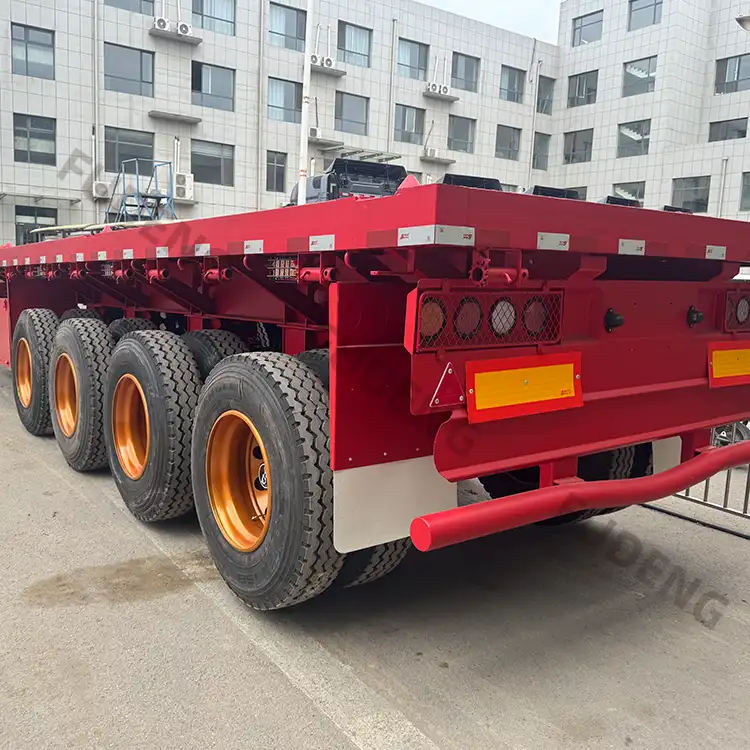
Higher capacity means higher weight and fuel consumption.
Choose based on your average cargo weight, with a 10–20% margin.
· Standard flatbed: removable side panels, anti-slip deck, tie-down equipment
· Low bed trailer: strong ramps, anti-slip design, deck size, axle count, tire specs
Avoid paying for unnecessary features.
Don’t just look at price—check:
· Welding quality
· Paint durability
· Suspension and landing gear materials
· After-sales service and warranty
A strong after-sales network reduces downtime.
Recommended manufacturers:
· Fudeng Vehicle: Large factory, full range (flatbed, low bed, tank trailers, trucks), customization available, high quality, 24/7 after-sales support, cost-effective
· CIMC: Large-scale, wide range, higher price
· Henan Shunda Vehicle: Smaller factory, niche offerings
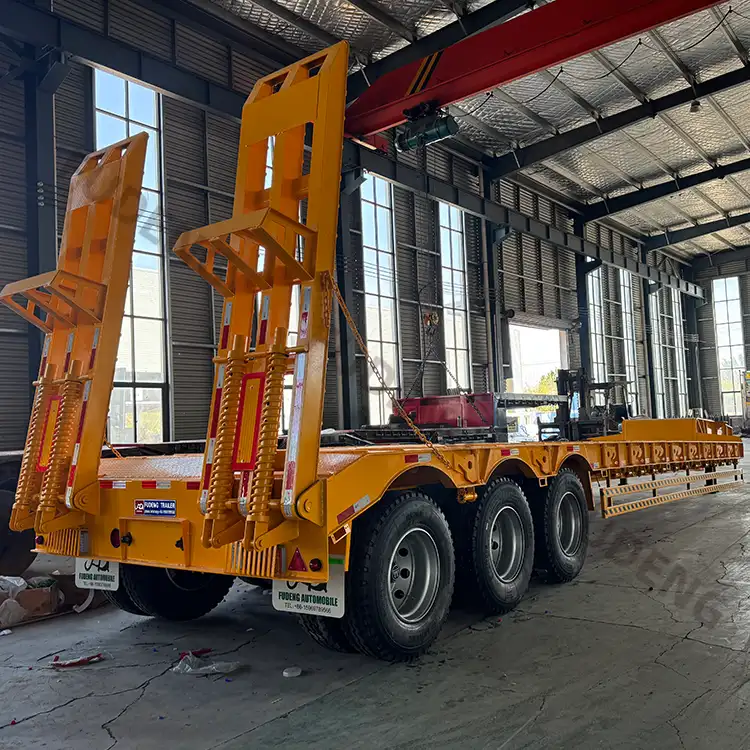
Total vehicle weight is fixed.
A heavier trailer means less actual cargo capacity, which affects profitability.
Check:
· Steering flexibility
· Braking performance
· Stability under load
Especially important for low bed trailers.
Invest in key components:
· Standard Flatbed: side panels, tie-down systems
· Low bed: ramps, axles, tires
Save on non-essential features if needed.
The choice is simple:
· General cargo & flexibility → Standard Flatbed Trailer
· Heavy equipment & oversized cargo → Low Bed Trailer
Master the logic of:
Cargo first → Road conditions → Compliance
…and combine it with the practical tips above to make a smart, efficient purchase decision.
If you’re still unsure, you can provide:
· Cargo type
· Expected payload
· Transport routes
· Budget
Our professional consultants can offer one-on-one recommendations and customized configurations to make your purchase easier and more efficient.
A semi trailer is a trailer in which the axle is placed behind the center of gravity of the truck (when the truck is evenly loaded) and is equipped with a coupling device that can transmit horizontal and vertical forces to the tractor. Semi trailers are generally three axle semi trailers, and their types are divided into 11-meter fence cargo semi trailers, 13 meter dropside semi trailers, lowbed semi trailers, etc. It is a heavy-duty transportation vehicle connected to the front of the semi trailer through a traction pin. Semi trailers include flatbed semi trailers, fuel tank semi trailers, lowbed semi trailers, tipper semi trailers and other types of trailers, which are suitable for road transportation with different needs and can meet a variety of transportation methods.
Next, let me introduce to you the largest semi trailer factory in China.
Shandong Fudeng trailer is the largest semi trailer factory in China and one of the famous trailer manufacturers in China. Fudeng Semi-trailer exports more than 5,000 semi trailers to various cities in Africa every year. Fudeng is a Chinese company specializing in manufacturing trailers, including flatbed trailers, container trailers, fuel tank trailers and other types of heavy-duty trailers. They are known in the towing industry for their quality products and competitive pricing.
Shandong Fudeng trailers have a wide range of products, including container trailers, flatbed trailers and special trailers for different industries. Shandong Fudeng usually operates large manufacturing facilities and supplies trailers not only to the Chinese domestic market but also to other countries around the world. Especially in most countries and regions in Africa, Shandong Fudeng trailers have a very large influence in the entire African region. Many large African dealers or well-known local companies in Africa have very happy cooperative relations with Fudeng Out of the African accident, Shandong Fudeng Trailers also cooperates with many customers in the Americas and Southeast Asia, so the number of trailers and trucks exported every year is very large.
Not only are there a huge number of semi trailers exported, Shandong Fudeng also has specialized factories to produce various accessories needed for trailers. They have their own factories for axles, suspensions, braking systems and other related accessories, so their trailers are in The price is also relatively cheap. Not only that, they have also cooperated with internationally renowned accessories brands and are their agents, such as FUWA, JOST, L1 and other internationally renowned brands, because you don’t have to worry about the quality of the trailer at all. There have been no problems with the trailers exported from Fudeng
If you are looking for specific information about Fudeng Trailers or their product range, it is best to visit their official website or contact them directly for the most accurate and up-to-date details.